Mucosa
The body's most consequential interface
Mucosa is where tissue meets world. Many of medicine's hardest questions still lie open here — barrier dysfunction, microbiome-host signalling, resolution biology. This topic curates the current evidence with citation rigor.
Pharmacomicrobiomics of Non-Antibiotic Drugs: Mechanisms and Clinical Consequences of Gut Microbiota Alterations
Background: The gut microbiota constitutes a metabolically active “second genome” that profoundly modulates drug pharmacokinetics, pharmacodynamics, and adverse reaction profiles. Beyond antibiotics, widely prescribed non-antibiotic pharmacotherapies exert clinically relevant pharmacomicrobiomic effects with implications for therapeutic optimisation and pharmacovigilance.…
Read article →Latest research
38 articles in Mucosa tagged Hypothesis, sorted by date
Beyond intestinal failure: Expanding therapeutic frontiers of glucagon-like peptide-2 in gastrointestinal disease
Short bowel syndrome represents a severe form of intestinal failure characterized by malabsorption and dependence on parenteral nutrition (PN). Advances in gut hormone research…
Read article →
The mucin barrier — architecture
The intestinal mucus barrier is more complex than commonly described. In the colon, there are two mucin layers: an inner, dense, sterile layer firmly attached to the epithelium,…
Read article →
MUC2 glycosylation — the structural key
MUC2 — the dominant secreted mucin in the colon — is not protein with sugar attached. It is, by weight, mostly sugar. Up to eighty percent of the molecule's mass is its O-linked…
Read article →
FUT2 secretor status — the testable genetic variable
The FUT2 (Secretor) gene encodes an α-1,2-fucosyltransferase responsible for expressing ABO histo-blood group antigens on gastrointestinal mucosa and in bodily secretions.…
Read article →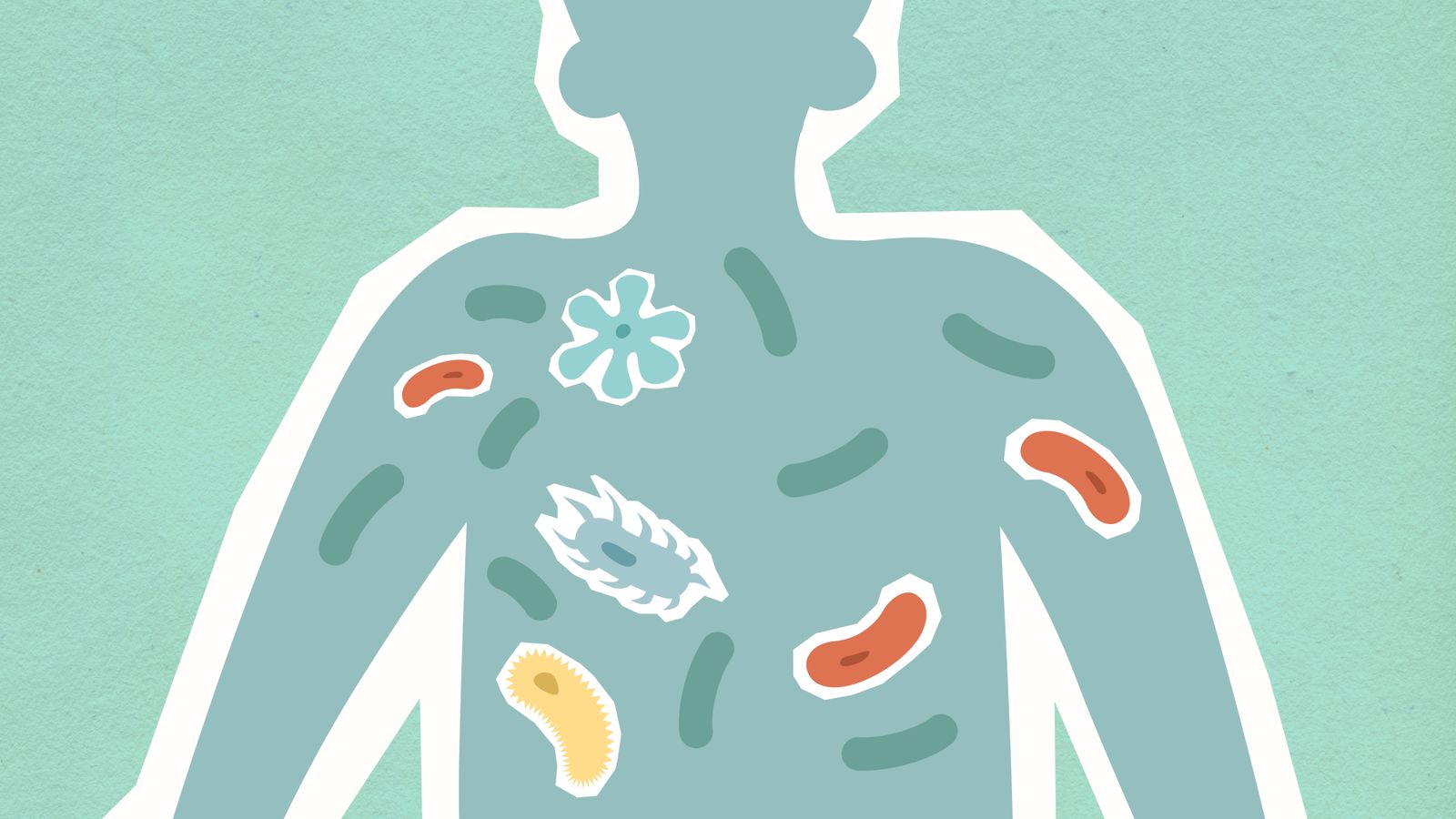
Resolution biology — SPMs (resolvins, protectins, maresins)
Conceptually one of the most important paradigm shifts in inflammation research in the past 15 years, led by Charles Serhan at Harvard. Resolution of inflammation is not a passive…
Read article →
The sepsis-permeability feedback loop
"Leaky gut → sepsis" is not a one-way mechanism. It is a self-reinforcing cycle. Both leaky gut (barrier defect at intestinal surface) and gut dysbiosis are intrinsic to sepsis.…
Read article →
Ileocecal vulnerability
Patients with SIBO have significantly lower ileocecal pressure thresholds, prolonged small bowel transit time, and higher gastrointestinal pH compared to those without SIBO. The…
Read article →
Butyrate and SCFAs — the central fuel
Goblet cells and colonocytes run on butyrate as primary energy source. This is not incidental. Butyrate serves as a key energy substrate for goblet cells producing MUC2 and…
Read article →
Akkermansia muciniphila and the mucolytic balance
Akkermansia muciniphila colonizes the mucosal layer of the human gut. It is particularly effective at increasing mucus thickness and improving barrier function. A. muciniphila…
Read article →Contributors
All contributors →Researchers and clinicians whose work appears in this topic. Click a name for their full Bionoia profile.
Initiatives & calls
All initiatives →Research topics, team-searches, collaborations, and funding signals from hospitals, companies, and academic groups.
Other topics
Bionoia grows with the field.
Share a paper that shifted your thinking. Propose a topic worth weaving. Signal a need for collaboration. Every contribution sharpens what the next reader sees.